

In January 2026, Honey (owned by PayPal) was removed from two major affiliate networks within the span of a few days. Rakuten Advertising terminated Honey from its network effective January 12, cutting off access to roughly 2,000 retail partners. Shortly after, Impact.com removed Honey from its Discovery Marketplace and temporarily suspended its account following a compliance investigation.
These actions come amid growing attention on attribution practices and code usage behavior tied to browser extensions. While PayPal has since issued a response, the decisions by both networks point to a broader shift in how compliance is being enforced across affiliate programs. While Rakuten and Impact.com have taken action, other networks like CJ Affiliate have not commented, though industry watchers expect similar enforcement could follow.
What Happened
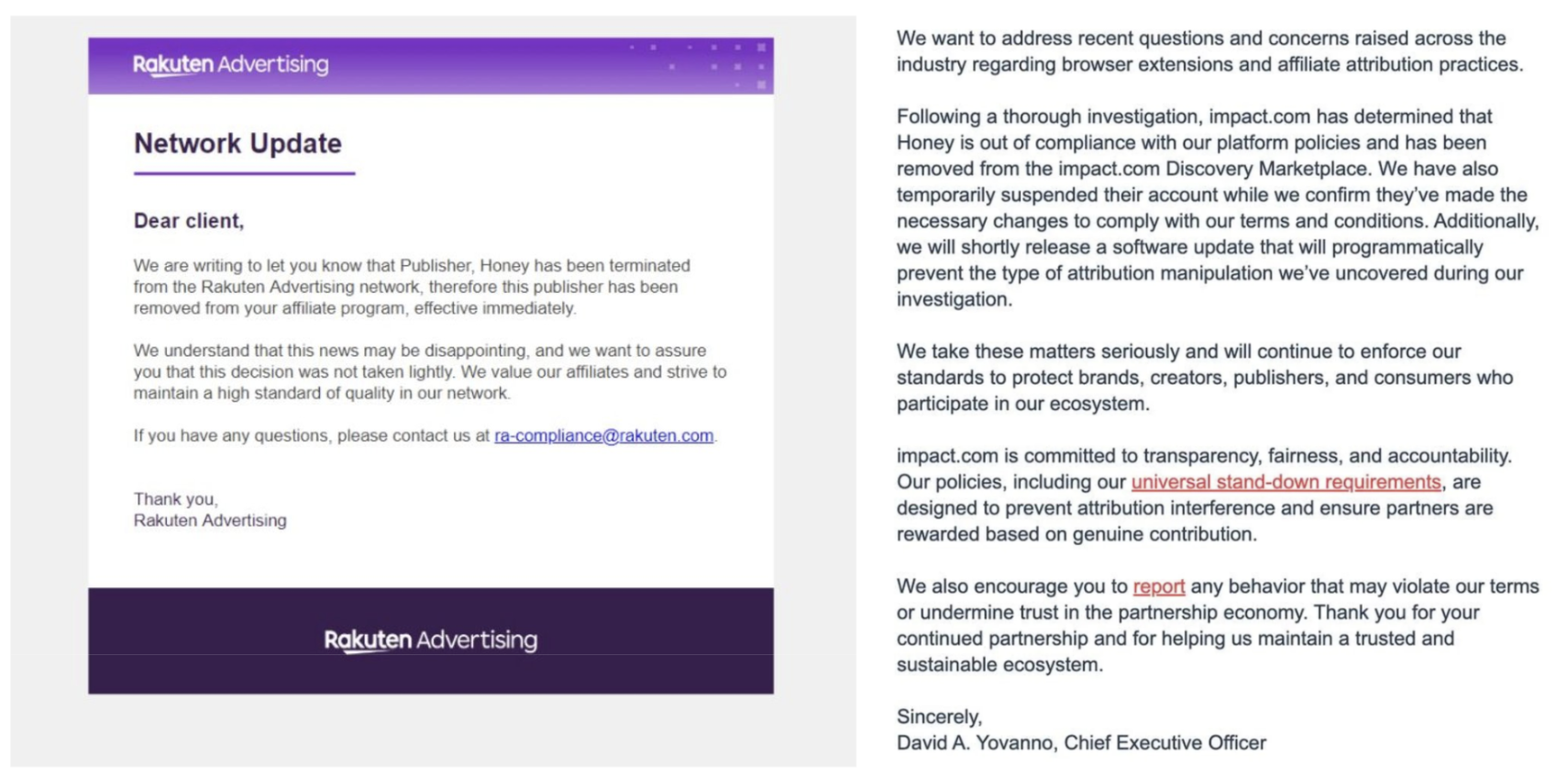
Rakuten Advertising notified advertisers on January 12, 2026 that Honey had been terminated from its affiliate network, effective immediately. Rakuten declined to comment publicly on the decision.
Impact.com followed on January 17, 2026, announcing that Honey had been removed from its Discovery Marketplace and that its account was temporarily suspended. According to Impact.com CEO David Yovanno, the action came after a thorough investigation that found Honey to be out of compliance with platform policies related to attribution practices. Impact.com stated that Honey’s suspension will remain in place while the company verifies that required changes have been made.
Together, these actions remove Honey from two of the largest affiliate ecosystems, significantly limiting its access to merchant partnerships.
PayPal’s Response
After Rakuten’s termination, PayPal issued a response. The company stated that it is aware of the actions taken regarding Honey and is working with Rakuten on a resolution.
PayPal explained that the issue stemmed from legacy code implemented prior to its acquisition of Honey. According to the company, the code impacted less than 0.1% of Honey’s traffic and has since been identified and deactivated. PayPal emphasized that Honey supports billions of shopping trips per year and reiterated its commitment to maintaining a fair and compliant ecosystem.
While PayPal maintains that the issue has been resolved, affiliate networks have continued to take enforcement action based on their own investigations and standards.
Why This Matters
Honey has faced declining revenue for many brands and ongoing challenges around enforcing code usage rules and maintaining program integrity. Networks are increasingly enforcing standards to protect advertiser trust and ensure consistent attribution.
For brands that relied on Honey, these removals may create short-term gaps in affiliate coverage or tracking. However, they also highlight the importance of understanding where affiliate value is truly coming from and how attribution is being earned.
More broadly, this situation reflects growing scrutiny of browser extensions and last-click attribution behavior across the industry.
What Brands Should Do Next
This is an ideal time to reassess your affiliate mix and shift efforts toward partners that offer more control and predictable performance. Brands should review where last-click conversions are coming from, especially at checkout, and confirm that attribution aligns with actual value provided.
If Honey played a meaningful role in your program, expect some redistribution rather than outright loss. Work with your network to identify partners that are likely to benefit and ensure tracking remains stable.
Consider partners like Checkmate, which provide:
Exclusive codes that cannot be leaked publicly
Easy-to-manage code controls
Reliable performance and tracking
Taking proactive steps now helps protect your program, reduce attribution risk, and maintain strong relationships with both affiliate partners and networks.
Revel Interactive’s POV
At Revel Interactive, we see this as part of a broader trend toward transparency and accountability in affiliate marketing. Networks are drawing clearer lines around compliance and partner behavior, and enforcement is becoming more consistent across platforms.
Brands that adopt partners with clear rules, reliable reporting, and measurable value contribution will be better positioned for stability and long-term growth.
Want more context? Read our original January 2025 coverage on Honey and affiliate compliance here.
Sources:
Hello Partner: Rakuten Advertising Removes PayPal Honey Browser Extension From Its Network
PPC Land: Honey Loses Access to 2,000 Clients After Rakuten Network Termination
PPC Land: Impact.com Just Kicked Honey Off Its Network for Hiding Cookie Theft
Hello Partner: PayPal Responds to Honey Stand-Down Allegations and Rakuten Removal