

There's a ceiling that every bottom-funnel-heavy program eventually hits. Search and Shopping are good at capturing demand that already exists. The problem is you can only capture so much of it before you run out of people to reach.
The brands seeing real growth right now are investing earlier in the funnel. YouTube and Demand Gen aren't just awareness plays. They're what make your lower-funnel channels more efficient when it counts most. And Q4 is when that gap shows up hardest.
Q4 Performance Doesn't Start in Q4
The audiences converting in November and December are built in Q2 and Q3. If you wait until peak season to start investing in demand creation, you're already behind, competing for the same high-intent traffic as everyone else at the most expensive time of year to do it.
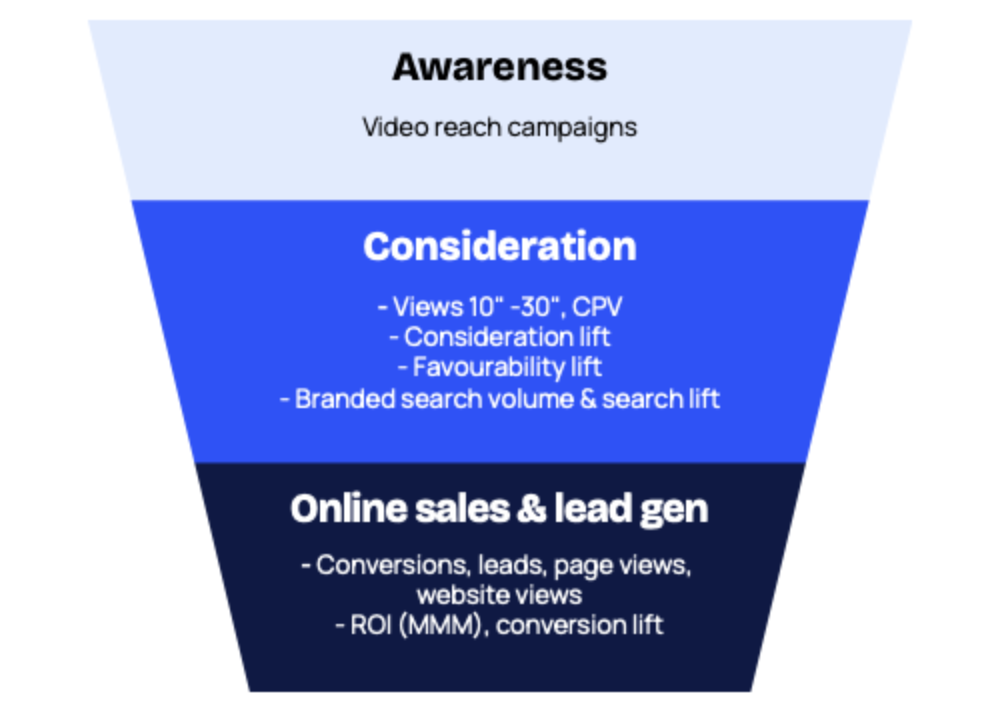
The funnel works in layers. YouTube is where you build familiarity at scale. Demand Gen is where you stay present as users move from passive awareness into consideration, reaching them across YouTube, Discover, and Gmail. Search, remarketing, and Performance Max are still closing the deal. They just do it better when the audience is already warmed up. These pieces work best when they're connected, and the return compounds when upper-funnel activity starts early enough.
That compounding effect is backed by real data. According to Fospha's Full-Funnel Google Report, brands that added just one additional channel to their Google mix saw 14% higher ROAS compared to those that kept their mix unchanged, and brands that added two channels achieved 37% higher ROAS. A broader mix gives Google's systems more signal to optimize against and creates more entry points across the customer journey.
Building Audiences That Pay Off in Q4
Most brands approach audience strategy like a retargeting checklist. Tag visitors, build lists, remarket to people who almost converted. That works fine in a normal environment, but it breaks down during peak season when everyone else is doing the exact same thing with the same audiences.
Building ahead of time looks different. A YouTube view isn't a vanity metric. When someone watches your content beyond a few seconds, that's an early signal of interest. Retargeting those viewers later through Demand Gen is a fundamentally different starting point than going cold. Layering first-party data (customer lists, site visitors, engaged users) across both prospecting and remarketing means your data is working across placements, not just in search. Custom segments built on search behavior let you reach users before they've even clicked an ad, pulling them into environments where you can shape perception earlier.
What ties it all together is thinking in sequences rather than single interactions. Awareness builds in Q2. Consideration develops in Q3. By Q4, you're not introducing your brand. You're reinforcing it. That sequence is what makes peak season more efficient rather than more expensive.
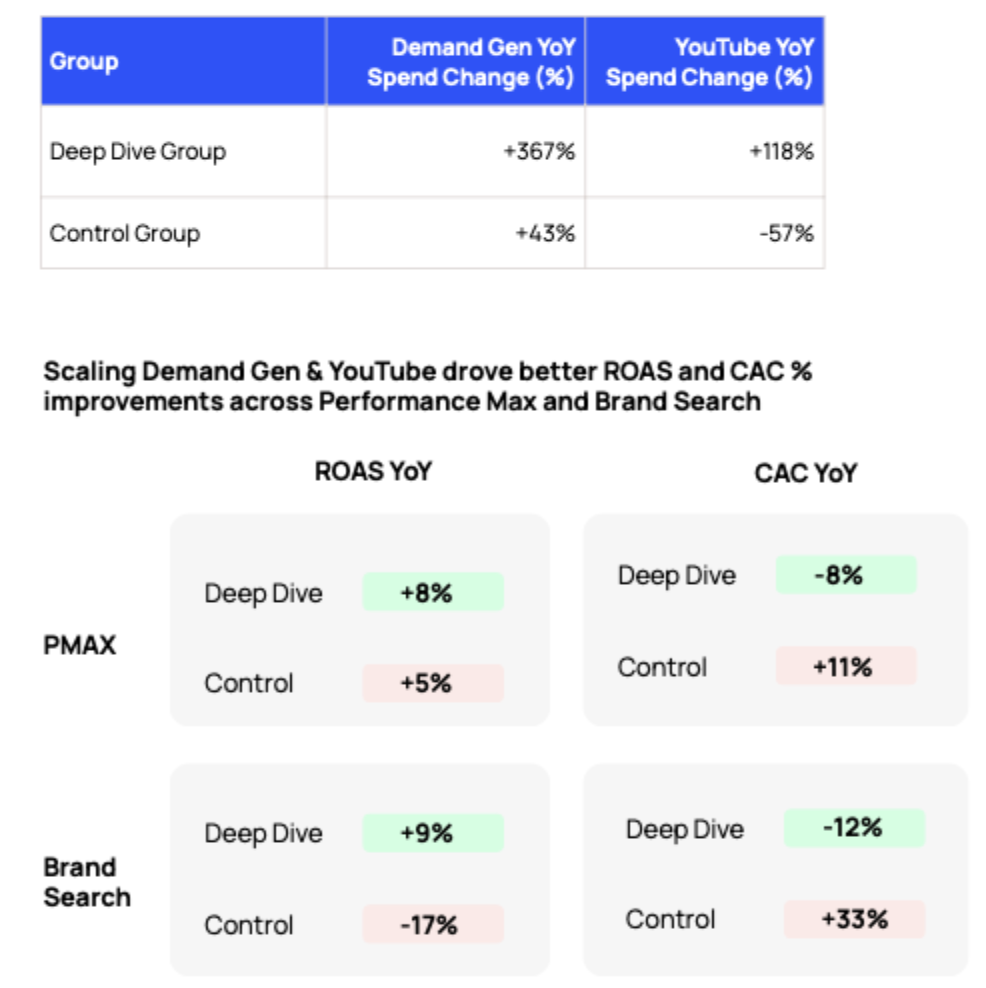
The downstream impact of investing this way shows up clearly in the Fospha data. Brands in their Q4 2025 program that scaled Demand Gen and YouTube saw ROAS and CAC improvements not just in those channels, but in Performance Max and Brand Search as well. Deep Dive brands increased Demand Gen spend 367% and YouTube spend 118% year over year and saw PMAX ROAS improve 8% and Brand Search ROAS improve 9% year over year. The control group, which scaled back YouTube and grew Demand Gen more modestly, saw the opposite.
Measuring What Actually Matters Before Q4
Measurement is usually where the full-funnel argument falls apart internally. If you're relying on last-click attribution, upper-funnel activity will always look undervalued, and that becomes a real problem when you're trying to justify investing in it ahead of peak.
A more complete picture looks at a few things together. Branded search lift is one of the clearest indicators that YouTube investment is working. If people are searching for your brand more after being exposed to video ads, demand is being created at the top of the funnel. Fospha's full-funnel measurement consistently finds that click-based attribution significantly understates YouTube's contribution, with true ROAS coming in substantially higher than what platform reporting shows. Beyond that, blended metrics including revenue trends, new customer acquisition, and overall CPA give you a better read on program health than channel-level ROAS in isolation. And for campaigns where you need a clear business case, incrementality testing through geo holdouts answers the simple question: what wouldn't have happened without this investment?
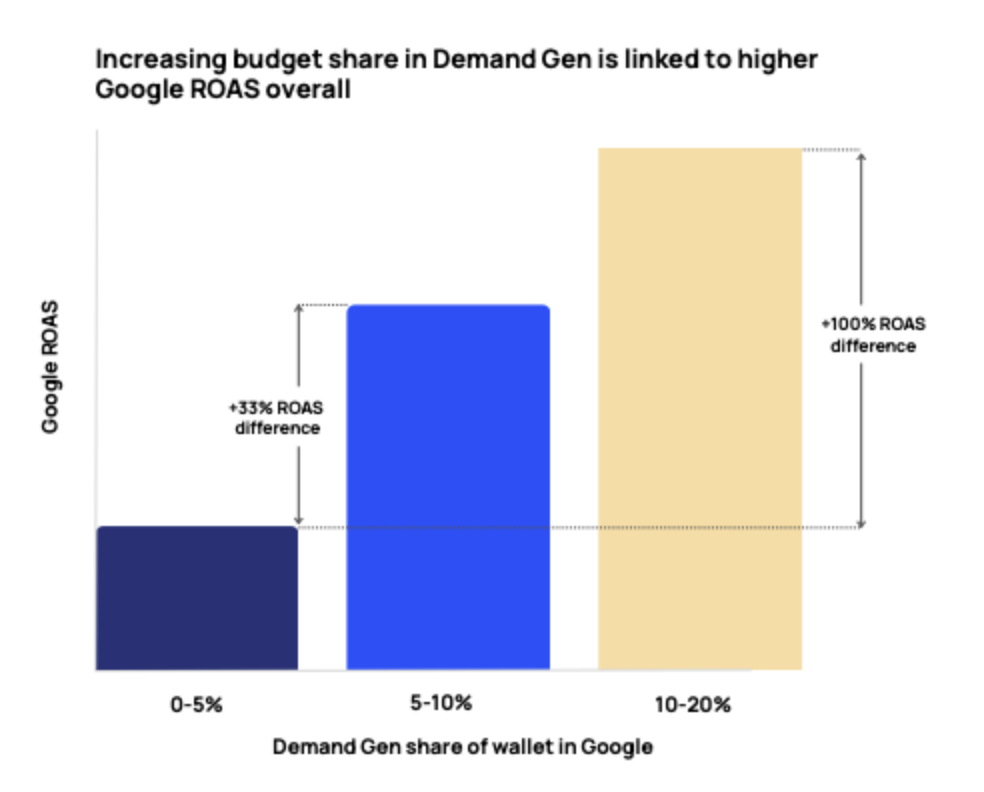
The budget allocation question also has a more concrete answer than most clients expect. In Fospha's research, brands allocating 10-20% of their total Google budget to Demand Gen achieved double the ROAS of brands allocating 0-5%. Most accounts spend well below that threshold, which means there's real headroom before hitting diminishing returns.
Creative That Actually Works on YouTube and Demand Gen
Getting the strategy right is only half of it. Creative usually gets treated as a supporting piece when it actually does most of the work, and if you're planning for Q4, not all creative can do the same job.
On YouTube, the first few seconds carry most of the weight. A clear hook, movement, or a relatable problem gets you past the skip button. Branding needs to show up early enough to be remembered, not saved for the end. On Demand Gen, clarity matters more than cleverness. Headlines have limited space and visuals do most of the work, so the product, use case, or outcome needs to be immediately obvious across Discover and Gmail. Across both, consistency is what builds familiarity. If someone sees your brand on YouTube and then again in Demand Gen, it should feel connected. Visual identity, messaging, and positioning should carry through. Google's ABCD framework (Attention, Branding, Connection, Direction) is worth keeping in mind here, and ads that follow those principles have shown measurable lifts in both short-term sales and long-term brand impact.
RMP's POV: Growth Starts With Demand Creation
The biggest risk heading into Q4 isn't wasted spend. It's underinvesting in the channels that build your future pipeline. At RMP, we treat YouTube and Demand Gen as the upstream investment that makes your entire Google program more effective over time. They're not meant to replace conversion channels, but the data is clear that brands running a connected full-funnel approach consistently outperform those optimizing only for what's easiest to measure. If your strategy only prioritizes immediate returns, you end up reacting to demand instead of creating it, and in Q4, that gets expensive fast.
If you're looking to reduce reliance on bottom-funnel channels and build a strategy that performs when competition peaks, it starts with audience development now. Reach out to our team to start building a full-funnel approach that's ready before peak season hits.
SOURCES
Google: https://support.google.com/google-ads/answer/14783551?hl=en
Google: https://support.google.com/google-ads/answer/9049825
Google: https://business.google.com/us/ad-solutions/youtube-ads/
Google: https://support.google.com/google-ads/answer/13695777?hl=en
Search Engine Land: https://searchengineland.com/google-ads-demand-gen-playbook-464902
Fospha: The Full-Funnel Google Report (2026) — fospha.com